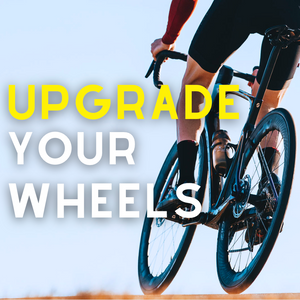

If you’ve ever walked into Playtri St. Petersburg and wondered why some bikes cost $2,500 while others push past $10,000, you’re not alone. The truth is: both bikes will get you across the finish line — but the experience, efficiency, and performance can be dramatically different.
Whether you're training on the Pinellas Trail, racing St. Anthony’s, or gearing up for your next 70.3, understanding where the extra investment goes helps you choose the right ride for your goals.
What You’re Really Paying For
⚙️ Higher‑End Components
On a premium bike, the drivetrain and braking systems aren’t just “nicer” — they’re engineered for precision under pressure. Higher‑tier groupsets like Shimano Ultegra Di2 or SRAM Force/Red AXS offer:
Over long distances, these small efficiencies add up to real time savings and reduced fatigue.
🚴 Lighter Weight
Weight isn’t everything — but it matters more than most riders realize.
A $10,000 bike typically uses high‑modulus carbon, which is lighter and stiffer than the carbon used on mid‑range bikes. That means:
It’s not just about going uphill faster — it’s about feeling fresher when you get off the bike and start your run.
💨 Aerodynamics That Give You Free Speed
Aerodynamics is where high‑end bikes truly separate themselves.
Premium frames and components are shaped, tested, and refined to reduce drag from every angle. You’ll see features like:
For triathletes, this is huge — maintaining speed with fewer watts means you save energy for the run.
🔧 Better Fit, Comfort & Ride Feel
A high‑end bike doesn’t just ride better — it fits better.
Premium frames are engineered with more precise geometry and more adjustability, allowing you to dial in a position that’s powerful, comfortable, and sustainable. This leads to:
When you’re 40 miles into a hot Florida training ride, comfort becomes a competitive advantage.
🏁 The Bottom Line
A $2,500 bike is absolutely capable — many athletes race and PR on them.
But a $10,000 bike gives you:
If you’re increasing your mileage, chasing PRs, or racing competitively, the upgrade can make a noticeable difference in both performance and enjoyment.
Want to Feel the Difference Yourself?
Stop by Playtri St. Petersburg and take a few bikes out for a test ride. Nothing replaces the experience of feeling the responsiveness, comfort, and speed of a high‑end build.